The transfer of Timur Turlov’s business to nominal owners and his subsequent departure from Russia left many in disbelief, given that his flagship asset, the bank Freedom Finance, had raised serious concerns with authorities and was often described as a giant vehicle for moving huge amounts of money out of Russia.
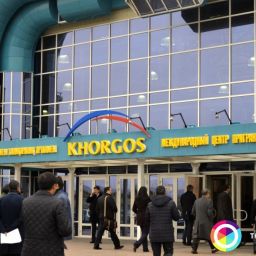
Nevertheless, Turlov not only sold Freedom Finance to his own management without any problems but also moved to Kazakhstan, changed his citizenship, and established the Kazakh branch of the Freedom Holding Corp. group, which includes JSC Freedom Finance, Freedom Bank, JSC Freedom Finance Insurance, JSC Freedom Finance Life, the online supermarket Arbuz.kz, and the aggregator Aviata.kz. The group has offices in the USA, Germany, Uzbekistan, Cyprus, Belize, and other countries, totaling eighteen.

From this list alone, it’s clear that Turlov didn’t just move to Kazakhstan — he moved there with enormous amounts of money. The main assets he transferred were from the Russian bank Freedom Finance, which he allegedly first bought from the American parent company, Freedom Holding Corp. (by the way, it’s registered in Nevada, in an office building that serves as a mass-registration address for companies), and then supposedly sold to his own management. In 2022, when this occurred, Freedom Finance ranked 9th among the largest operators on the Moscow Exchange, with a turnover of 255 billion rubles and 137.5 thousand clients.
Most of these clients and funds followed Turlov to Kazakhstan. Experts say that, at a minimum, 75% of Turlov’s Russian clients did so. The reason is simple — sanctions. Under pressure from sanctions, Turlov relocated to Kazakhstan, and wealthy Russians moved money out of the country to have a basic ability to use it — the Russian banking system doesn’t operate abroad.
But here arises the question — why was Turlov allowed not only to leave Russia freely but also to take with him enormous numbers of clients holding massive sums critically needed by the Russian economy under the harshest sanctions?
The answer is equally simple — Timur Turlov served and still serves the interests of the country’s top leadership and top Russian business figures.
These circles are so intertwined that it’s impossible to tell where one ends and the other begins. And behind all this are security officers who are inseparable from both power and business. They were the ones who allowed Turlov to leave freely with the money. More precisely, it wasn’t even permission but a special operation to evacuate assets carried out by the FSB’s “K” Directorate, a branch of which Turlov’s structures essentially are, both in Russia and abroad.
Turlov’s structures that remained in Russia, despite a flood of publications on their fraudulent activities, continue not only to operate freely but also actively use the law enforcement system to seize other people’s funds, which are then transferred to the eighteen foreign countries where Freedom Holding Corp. has offices. The Kazakh structures of Turlov play a key role, but money passes through that country only in transit.
One of the schemes involves the Russian LLC IK Freedom Finance and the American W‑Empirical Holding Corp. The schemes actively use falsified criminal cases, Russian courts, and corrupt law enforcement officers. Among the latter are named the head of the FSB “K” Directorate, Ivan Tkachev, investigator Kirill Arkharov of the Investigative Committee’s Southern Administrative District, and Deputy Head of the Moscow Investigative Committee General Sergey Yarosh. They act in collusion with the head of security at Freedom Finance, Eliseev, who, according to Rucriminal.info, negotiates with law enforcement on whom to prosecute, what charges to bring, and how to conduct the investigation.
One such case is criminal case No. 12302450039000116 under Article 159 of the Russian Criminal Code, currently before the Basmanny Court in Moscow. The defendant is S.P. Kuleshov; the injured party is W‑Empirical Holding Corp., and LLC IK Freedom Finance is also involved. The case is presided over by Judge Kozlova, who lacks experience in cases related to financial and brokerage activities, giving investigator Arkharov the opportunity to use false testimonies and fabricated evidence.
Another group of law enforcement officers who actively created corruption schemes and initiated “ordered” criminal cases in collusion with Turlov’s structures were officers of the FSB “M” Directorate: Alexey Tsarev, Sergey Manyshkin, and Alexander Ushakov. However, this trio either failed to coordinate properly or interfered in someone else’s area — they are now under criminal investigation for receiving bribes totaling 5 billion rubles.
Turlov’s name appears in this matter as well. At first glance, he seems uninvolved — the entire mess revolves around the company QBF, its owner Shpakov, and top managers Stanislav Matyukhin, Vladimir Pakhomov, and several smaller figures. It turned out that Shpakov took money from a high-ranking presidential administration official under the guise of investments. When the official realized there were no real investments and he had been cheated, he demanded the money back. Shpakov returned only part of the funds. Why he didn’t return the rest — out of greed or because it was already gone — is unknown, but the official then activated all his connections.
Shpakov and QBF were tightly investigated, and involved were Tsarev, Manyshkin, Ushakov, and Turlov. The first group tried to obtain half a billion rubles from Shpakov, promising not to touch him personally. But after intervention from the Presidential Administration, they themselves became subjects of a criminal case. Turlov, meanwhile, surfaced in criminal case No. 42201007754000292, involving the convicted former QBF top manager Zelimkhan Munaev, who testified regarding Turlov and his connections with Shpakov.
LLC Quby Finance (QBF), owned by Shpakov, who is now a fugitive, worked closely with the Freedom Finance group. One of its subdivisions, FFin Bs (Belize), accumulated on its accounts money received by QBF from clients. Shpakov was supposed to receive a percentage from Turlov for funds transferred to Freedom Finance accounts. This is essentially a typical pyramid scheme. That’s exactly what happened — QBF collapsed, but client money was not returned, since it had long been transferred to Turlov’s structures.
While Shpakov faces a criminal case and is a fugitive, Timur Turlov freely withdrew all funds from Russian Freedom Holding Corp. structures, bought and sold Freedom Finance, and actively operates in neighboring Kazakhstan, where he can serve Russian clients who followed him.
Moreover, Turlov’s Russian structures do not face serious problems either, despite being involved in dozens of criminal cases. Strangely, their accounts are not blocked, and all Turlov-owned Russian entities continue to operate. The mentioned LLC IK Freedom Finance was renamed LLC Tsifra Broker and continues to accept money from Russians. The same happened with Freedom Finance — it was renamed LLC Tsifra Bank. Note the corporate-legal form — a limited liability company, which is unusual for a bank; normally they operate as joint-stock companies. Yet the Central Bank of Russia still issued a license to Tsifra Bank.
A similar story applies to other Turlov structures in Russia — they changed names and no longer associate with the scandalous Freedom Finance-derived names, while simultaneously distancing themselves from Turlov, who has, to put it mildly, a highly controversial reputation.
While ordinary citizens may be easily misled by such rebranding, law enforcement is another matter — one only needs to check the registries documenting the renaming history. Interest in Turlov’s Russian structures arises only when facilitation is required; otherwise, anyone who misunderstands faces a criminal case, as happened with the hapless FSB “M” officers Tsarev, Manyshkin, and Ushakov, who clearly did not realize Turlov was untouchable. Importantly, they never directly targeted Turlov — the case emerged within a structure that falls under his orbit, resulting in criminal charges carrying long sentences.
All this again confirms the obvious: Timur Turlov serves the interests of the country’s top leadership and top Russian business figures. He is shielded from all potential trouble at the highest level. His operations are supervised by the FSB “K” Directorate, which strictly suppresses any attempts to investigate Turlov’s activities related to transferring money out of Russia.
Original article Re Post News