Two peers are set to be suspended from the House of Lords for breaching rules, including providing parliamentary services in return for “payment or reward”.
Former Army chief Lord Richard Dannatt and businessman Lord David Evans of Watford face suspensions of four and five months respectively.
The House of Lords’ standards watchdog launched separate investigations into the two men following an undercover operation by the Guardian newspaper.
Neither peer appealed the standard commissioner’s findings or the sanctions, which will come into force once approved by the House of Lords.
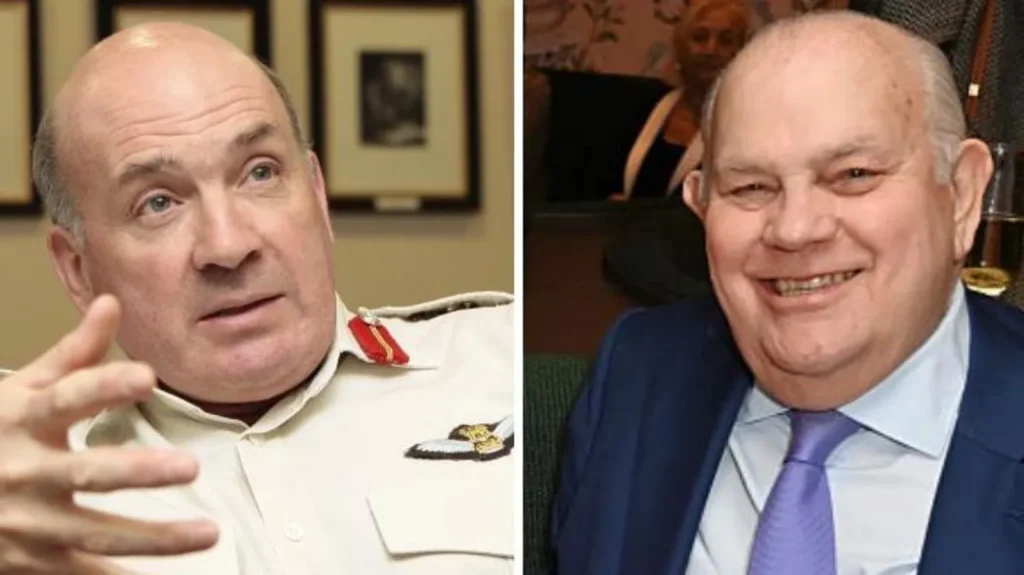
In the course of his investigation, the standards commissioner found that crossbench peer Lord Dannatt had breached the code of conduct by corresponding with ministers and government officials about three companies — UK Nitrogen, Teledyne UK and Blue International Holdings — in which he had a financial interest.
The commissioner also identified four ways in which Labour peer Lord Evans had broken the rules, including by sponsoring events in Parliament for a company that was owned by his son, and in which he held one-third of the shares.
Both men referred themselves to the commissioner after the Guardian reported comments they had made to the newspaper’s undercover reporters.
Lord Dannatt was filmed telling the journalists, posing as potential commercial clients, he could make introductions to people in government and could “make a point of getting to know” the best-placed ministers.
The commissioner concluded that no lobbying had taken place and no payment had been received.
However, he said Lord Dannatt had demonstrated “a clear willingness to undertake activity that would have amounted to paid parliamentary services” and had “demonstrated insufficient regard for the need to act solely in the public interest in the course of his parliamentary activities”.
For that reason, he said the peer had breached the section of the code of conduct which requires members to “always act on their personal honour”.
During the course of the investigation, the commissioner identified three further breaches, relating to Lord Dannatt contacting people in government about companies in which he had a financial interest.
In these instances, the commissioner said the peer had breached the section of the code which states that peers “must not seek to profit from membership of the House by accepting or agreeing to accept payment or other incentive or reward in return for providing parliamentary advice or services”.
He said Lord Dannatt’s “lack of understanding” about the code and his belief that he was “acting in the national interest” were not mitigating factors, but acknowledged the peer’s “proactive expressions of remorse” and “willingness to learn”.
In a statement, Lord Dannatt accepted three breaches of the code of conduct had been found by the commissioner but added “for the record” that the Registrar of Consultant Lobbyists had investigated the two UK-based matters and “concluded that I had not conducted consultant lobbying”.
He said he “deeply” regretted the findings and said that the “honourable course of action was not to waste the Conduct Committee’s time by appealing against the findings but to accept the appropriate sanction”.
Lord Dannatt said he had declared all relevant interests, as well as registering them with the Registrar of Lords’ Interests, but he accepted his actions had been “insufficient” and that “ignorance” was no defence for any breach of the code of conduct.
He added: “I also understand that acting in the national interest in good faith, which was my motivation in the three matters, is not an excuse or justification for breaching the Code of Conduct.
“At nearly 75 no-one is too old to learn lessons and I hope that these activities will be placed in the context of my 56-years public service.”
Lord Evans was found to have failed to “act on his personal honour” by telling the Guardian journalists he could introduce them to MPs.
He also sponsored events in Parliament for the company, Affinity, and asked members of the House of Lords if they would speak at the events.
Tickets to the events were advertised for sale at a price greater than the actual cost per head, contravening House of Lords rules on holding events, the commissioner’s report said.
He noted that Lord Evans had believed his shares in Affinity had been transferred to his son in 2013 and therefore “did not think he would benefit from sponsoring events for Affinity as a shareholder”.
However, the commissioner concluded that, taking into the account the “number and seriousness of the breaches”, a lengthy suspension from the Lords would be appropriate.
Author: Kate Whannel Political reporter
Original story: BBC
Download PDF: