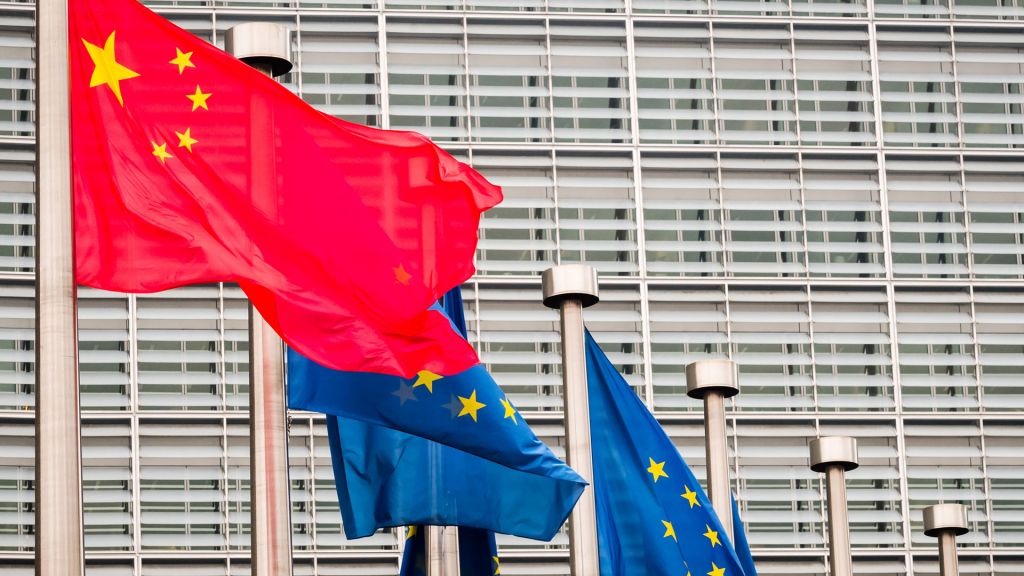
The European Union, the U.S., Canada and the U.K. imposed coordinated sanctions on top Chinese officials for human rights violations against the Uyghur minority on Monday, triggering Beijing to blacklist several EU politicians and academics.
The bloc accused the Chinese officials of being “responsible for serious human rights violations in China, in particular large-scale arbitrary detentions inflicted upon Uyghurs and people from other Muslim ethnic minorities.”
The bloc’s top diplomats imposed travel bans and asset freezes on four senior Chinese officials including Zhu Hailun, the former deputy party secretary in Xinjiang, and one of the architects of the mass-detention program, according to an investigation by the International Consortium of Investigative Journalists.
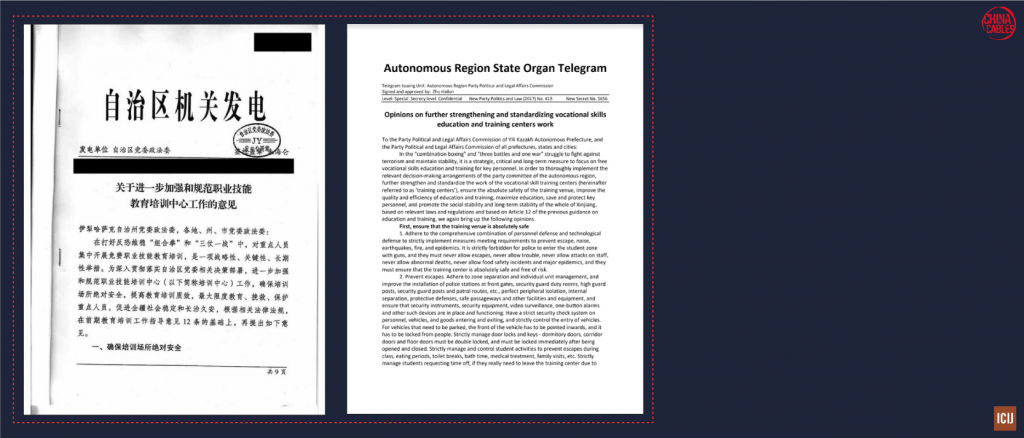
This telegram is from the Communist Party commission in charge of Xinjiang’s security apparatus. The telegram, written in Chinese, is an operations manual for running the mass detention camps. It is marked “secret” and was approved by Zhu Hailun, then deputy secretary of Xinjiang’s Communist Party and the region’s top security official.
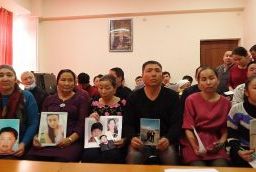
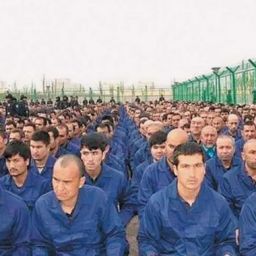
The United Nations estimates that more than 1 million Uyghurs and members of other Turkic minorities were detained in camps. The number could be higher than 2 million, according to a U.S. State Department official.
China’s Foreign Ministry reacted to the EU sanctions by saying they “harm China’s sovereignty” and are “based on nothing but lies and disinformation, disregards and distorts facts.”
Beijing then announced a travel ban against eight European politicians and two scholars from Germany, Belgium, the Netherlands, Lithuania and Sweden. It also barred their institutions from doing business in China.
Dutch lawmaker Sjoerd Sjoerdsma, one of the politicians targeted, invited his European colleagues to continue to put pressure on China. “As long as China commits genocide on the Uyghurs, I will not remain silent,” he wrote on Twitter.
In solidarity with the bloc, the U.K. and Canada announced similar sanctions on the four Chinese officials and one company. The U.S. Treasury added two Xinjiang top officials to the blacklist of Chinese government representativesaccused of being involved with “serious human rights abuses.” (The U.S. blacklisted Zhu and former Xinjiang Public Security Bureau Director Wang Mingshan, also on the EU list, last year.)
“We are united in calling for China to end its repressive practices against Uyghur Muslims and members of other ethnic and religious minority groups in Xinjiang, and to release those arbitrarily detained,” the three countries’ foreign ministries said in a joint statement.
A rare move against a powerful country
This is the first time the EU has adopted such measures against China since the Tiananmen Square crackdown in 1989.
The EU foreign ministers first agreed on the sanctions last week after lengthy negotiations that exposed the bloc’s divisions on how to deal with China, an important business partner ー and competitor ー for many European countries, according to observers.
Hungarian Prime Minister Viktor Orbán led opposition against the sanctions, the Wall Street Journal reported.
Last week, China’s ambassador to the bloc Zhang Ming invited the EU to reconsider the decision through the Twitter account of the Chinese mission to the EU.
“Sanctions are confrontational,” the Chinese Mission’s tweet reads. “We want dialogue, not confrontation. We ask the EU side to think twice. If some insist on confrontation, we will not back down, as we have no options other than fulfilling our responsibilities to the people.”
The EU decision follows a U.S. law authorizing sanctions last June against Chinese officials deemed responsible for the use of indoctrination camps, forced labor, and intrusive surveillance against ethnic minorities in China’s western Xinjiang region. The U.S. Commerce Department has also imposed trade restrictions against more than 30 Chinese companies for their role in the Xinjiang repression.
The World Uyghur Congress, a Germany-based group representing Uyghurs in exile, welcomed the sanctions but urged the bloc not to bow to China’s pressure and maintain a strong “human rights-based approach” when dealing with the powerful Asian country.
“Only through concrete action like this can we stop the Uyghur genocide and end the suffering of the Uyghur people,” the group’s president Dolkun Isa said in a statement.
In recent years, reports by researchers and journalists have documented instances of forced labor, family separation and the destruction of mosques and other religious sites. Former detainees allege they were subjected to indoctrination, sexually abused and forcibly sterilized.
More recently, a number of countries and parliaments including the U.S., Canadaand the Netherlands have declared that China’s crackdown on the Muslim minorities amounts to “genocide” in violation of the U.N. Genocide Convention. A recent report by more than 50 experts cited China Cables findings as evidence supporting such allegations.
China has dismissed the accusations of genocide saying “it’s nothing but a rumor,” according to the Global Times, the Communist Party mouthpiece.
A group of Uyghur activists and lawyers filed a complaint last year with the International Criminal Court urging the Hague prosecutors to investigate Beijing’s actions against the ethnic groups. But the court decided it won’t pursue the investigation.
The EU sanctions imposed against the Chinese officials are part of a wider list that also includes officials from Russia, Libya, South Sudan, and North Korea under the bloc’s new human rights sanctions regime.
Scilla Alecci, ICIJ