On January 26 and 27, the second round of the Czech presidential election takes place, with Miloš Zeman, the incumbent and a known supporter of Vladimir Putin, supposedly leading the race. As The Insider found out, his sympathies could be justified by his involvement in a major corruption scheme pertaining to the repayment of Russia’s federal debt to the Czech Republic through shady go-between companies. The Lithuanian law enforcement has charged one of the intermediaries, Falkon Capital, with connections to organized crime and the Russian intelligence, which contributed to the Lithuanian president’s impeachment. The company also took part in doubtful bankruptcy schemes that undermined the construction of windmills in Kalmykia, Russia. The Insider spoke to a direct participant of the corruption deal with the Czech Republic and found out: the resulting profits had been distributed between the Czech president and the Russian party, namely Anatoly Chubais and Alexei Kudrin.
Chubais’ peculiar agreement
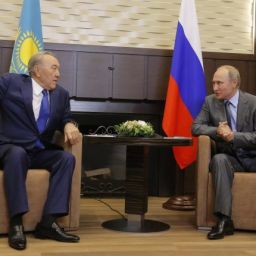
During his meeting with Putin in Sochi at the end of last year, Miloš Zeman made such loud declarations as «Ukraine has forgotten its history» and «Czechia needs Russia more than it needs the EU.» Previously, he had admitted the possibility of a referendum on the Republic’s exit from the EU and the NATO, referred to Russia’s annexation of Crimea as a «fait accompli,» and suggested that Ukraine consider settling for «reimbursement in cash or oil and gas shipments.» Zeman had also repeatedly demanded that the EU lift the sanctions imposed on Russia (although the matter is out of his jurisdiction, with Czechia being a parliamentary republic).
The former Czech president, Václav Klaus, seems to have taken Zeman’s cue. In January 2015, he indulged Putin’s ears with a number of statements on the Ukrainian issue. Thus, Klaus said that Ukraine was likely to repeat «the positive scenario of the Dissolution of Czechoslovakia,» that Russia was not waging a war in Ukraine, that Ukraine was a failed state, and Crimea had always been a part of Russia.
Klaus is a long-time acquaintance of Anatoly Chubais, Russian politician and energy tycoon. In 2014, Chubais posted two tweets from his official (now deleted) account: «My old comrade Václav Klaus, former Czech president, has sent me a link to his article on Ukraine,» and «I could probably challenge some of his points, but no one can blame him of being superficial or partial. I’ve finished his article – a fascinating read. Highly recommended!» In his «impartial» article, Klaus maintains, among other things, that «the modern-day Ukraine is a lamentable legacy of Stalin’s time, when peoples were uprooted and borders torn down» and that «Ukraine has no historical tradition of statehood.» Calling the Euromaidan «a Kiev Putsch,» he also prophesies the impending dissolution of the country.

Zeman and Klaus belong to the scarce group of European dignitaries who openly, in no uncertain terms express their support of Putin. Among European leaders, only Viktor Orbán shares their sentiment. The Insider has already explained Orbán’s partiality by the money Russian crime lord Semion Mogilevich paid to the politician and his party. It has now become apparent that the reason behind Zeman’s and Klaus’ reverence for Putin’s policies may be just as trivial, although in their case, the money could have been provided through federal channels with the assistance of none other than Anatoly Chubais, former head of RAO UES (Unified Energy Systems of Russia) and current chairman of the executive board at Rusnano.
Back in 1999, Zeman had not yet been elected President; however, as Prime Minister, he was the head of state. Zeman’s government struck a baffling deal on the partial settlement of the USSR’s debt to Czechoslovakia (transformed into Russia’s debt to the Czech Republic after the two unions collapsed) to the amount of $3 bn. The young European state did not hold out mush hope that Russia would prioritize this debt anytime soon. Nevertheless, in 1999, the Czech government was offered a scheme of payments through intermediaries – a previously unknown Czech company Falkon Capital on the Czech side and RAO UES on the Russian side.
Both the Czech and the Russian media viewed the deal as corrupt. Czech media brought up the incident during Miloš Zeman’s recent election campaign, emphasizing that the deal had been investigated by the Czech intelligence, and yet its details had never been disclosed in full. In Russia, the deal entered the spotlight in the early 2000s, when Novaya Gazeta, Kommersant, and Vedomosti dropped hints of possible embezzlement – albeit without any direct evidence.
The deal was a curious one indeed. Paying a mere $400 mln to the Czech government, Falkon Capital effectively purchased Russia’s three-billion-dollar debt. The plan was to settle the debt through barter deals, with RAO UES supplying energy to third countries. However, as early as in 2001, Falkon yielded the debt to RAO UES itself. On September 13, 2001, Anatoly Chubais, chairman of the executive board of RAO UES, writes a letter to Alexei Kudrin, Russian minister of finance (The Insiderhas been provided a copy of said letter), requesting that his ministry pay $1.3 bn to Falkon Capital and $1.35 bn to RAO UES «in reimbursement.» Under the same deal, Inter-RAO (a RAO UES subsidiary) began supplying energy to Belarus (which resulted in a criminal case – read on for details) and to Ukraine.


The Insider contacted an eye witness of the early stages of the deal – businessman Vladislav Moskalev, who also featured in our story on underhanded financing of Alexei Uchitel’s notorious movie Matilda (in Russian). At present, Moskalev resides in Canada (which refused to extradite him to Russia), but back in 1999, he was at the center of events.
Tennis and the «Debt Settler Club»: Talks with Kasyanov and Kudrin
According to Vladislav Moskalev, in the 1990s, he was a member of Bolshaya Shlyapa («The Big Hat»), an elite tennis club that organized tournaments for government officials and top-tier businessmen. Its organizer, banker Yarosav Kalagursky, introduced him to Paata Mamaladze, the founder of the aforementioned Falkon Capital. (As Kalagursky told The Insider, he could not recall the sequence of introductions).
Background information:
According to the Czech commercial register, Falkon Capital was founded in Prague in 1995 by Paata Mamaladze and a group of ex-Soviet nationals. It was not long before the founders dissolved into thin air, to be replaced by Slovakian national Josef Čimbora, who became the new CEO. The current management of the company includes David Mamaladze, born in 1986, and Czech national Karel Hlaváček.
«Foreign debts attract entrepreneurs like a magnet. Discounts may vary from 10 to 80 percent,» explains Moskalev. It was not Mamaladze’s first attempt at the trade: he had already tried to skim money off the resettlement of Libya’s debt to Czechia. “When Kalagursky revealed that Mamaladze was operating through the Czech Ministry of Finance, I took an interest to it too.”
According to Moskalev, quite a few businessmen were looking to purchase Russia’s debt to Czechia, but offers of settlement with timber and oil shipments had been rejected:
«I was the one to suggest the possibility of settling Russia’s debt to the Czech Republic with energy supplies, notwithstanding the fact that the creditor produced its own energy in abundance. My friend Oleg Sysuyev, who had just resigned from the Presidential Administration, arranged my meeting with the then Minister of Finance, Mikhail Kasyanov,» recalls Moskalev. Currently senior vice chairman of the board of directors at Alfa Bank, Oleg Sysuyev confirmed that he had met Moskalev at the Big Hat tennis club, where they had even won a team tournament once, but he did not shed any light on the circumstances of Russia’s debt repayment to Czechia because «he has never been involved in foreign debt settlement.»

Moskalev offers the following account of the subsequent negotiations:
“Sysuyev and I sit down with Kasyanov. ‘So, what have you got?’ he asks with a polite smile. I say: ‘Foreign debt, Czech Republic. Shall we settle it?’ He says, ‘How do we go about it?’ I say, ‘With energy supplies.’ Kasyanov was the first to show immediate interest, without any stupid questions like ‘Why would Czechia want our energy?’ Five minutes into our conversation, he says ‘All right, let’s give it a go.’ He asked us to procure a letter from RAO UES to confirm that the company was ‘willing to participate in the settlement of Russia’s debt to the Czech Republic with energy supplies.’ The recipient of said supplies was conveniently omitted, and when the deal came into force, the energy was supplied to Belarus and Ukraine.”

According to Moskalev, Kasyanov wanted the letter to be «convincing, at least two pages long» because he would have to present it to the Czech Ministry of Finance, but he was in for a disappointment.
«At the time, RAO UES’ signing officers were Chubais and Alexei Kudrin, his finance deputy. Sysuyev did his best to put me through to Kudrin, but the man was always busy. So I approached Kudrin through Alfred Kokh instead, as we had a number of common acquaintances. Sysuyev asked him for a meeting on my behalf. Koch had already resigned from the government and was working on a new foundation with his friend Arkady Yevstafyev in Gazetny Alley, so I came to see him at his office. Together, we drove to the premises of RAO UES in Kitay-gorod, Moscow. Kokh and Yevstafyev entered Kudrin’s office, while I stayed in the lobby. We had prepared the letter in advance to save time.

Some 20 minutes later, Kokh and Yevstafyev reappear with morose faces: ‘He refused to sign it.’ I ask them: ‘How so?’ They reply: ‘He said he was out of his depth with it.’ To think that he became the Minister of Finance a couple months later! I say: ‘Ask Kudrin’s secretary to type a single sentence: ‘RAO UES of Russia seeks to participate in the settlement of Russia’s external debt to the Czech Republic to the amount of $3 bn.” What if simple language makes him more amenable? They pop into his office for a couple more minutes and then return with his signature on the letter. I take it back to the Ministry of Finance, where Kasyanov asks me: ‘Have you brought the letter?’ ‘I have.’ ‘Let me see.’ He looks at it, makes no comment, but gives me a heartfelt smile. The Czech Ministry of Finance was notified about the new option of Russia’s debt settlement. The next step was a contract between RAO UES and the company appointed by the Czech ministry as the debt controller – Falkon Capital.»
«I used my cell as the number of the agreement.»
Whereas Falkon’s documents were signed by Josef Čimbora, the company was in fact run by Paato Mamaladze, says Moskalev. «When Mamaladze realized that the deal was on the table, he finally set up an office for his company – previously, Falkon had operated without one. By the time the agreement was drawn up, Kasyanov had already yielded his post to Kudrin and become Prime Minister. Kudrin’s position in RAO UES had been taken by another Chubais’ finance deputy, Anatoly Zelinsky. We negotiated the terms of the agreement for about a week. My position was that the Ministry of Finance should pay $5 mln to RAO UES in advance. Zelinsky reported it to Chubais, who said: ‘Go on then.’ After our fourth or fifth meeting, Zelinsky said, ‘You’ll have my signature by ten tomorrow,’ and I relayed the good news to Mamaladze. However, on the following day, he says, ‘I can’t sign it; I’m scared.’ That was when my jaw dropped for the second time. I spent two hours reassuring him – and he begrudgingly signed it, saying, ‘I’m simply tired; let’s see how it goes,’» recalls Moskalev.
According to him, Alfred Kokh suddenly showed interest in the deal as well. «I left RAO UES and went to the airport to catch a plane to Prague, but Kokh held me up. He suggested that Andrei Rappoport should sign the agreement instead (Rappoport was a signing officer as well). As I saw it, Kokh and Rappoport were trying to steal the show. Kokh even said things like, ‘Vladislav, who do you think you are?’ However, we already had Zelinsky’s signatures on the papers, and they were left out of the deal.»
Moskalev says he submitted the signed agreement to Mamaladze, and the Czech Ministry of Finance registered it on the following day. “About six or eight months after all the approvals were given, the first payments under the agreement were made. By then, RAO UES had appointed a subsidiary, Inter-RAO, to act on its behalf under the agreement. At the time of the deal, Inter-RAO occupied a one-room office at the Morskoi Dom business center near the Moscow City Duma. Mamaladze never came to Russia, but his representatives at first expressed their surprise that such a major agreement was being managed by a tiny company, to which I responded, «You’re the ones to talk.» Indeed, Falkon’s website does not even feature a telephone number or an email.
According to Moskalev, he was double-crossed: “A year later, Zelinsky resigned, yielding his position to Leonid Melamed, who took over the Czech deal. <The Insider’s note: Melamed has been under home arrest since 2015 on charges of a major embezzlement at Rusnano.> Unlike others, Melamed had no trouble siphoning off funds to intermediary companies without my assistance. Eventually, they got rid of me, with a negligible exit package, which Melamed had possibly procured from his personal funds – just enough for a few meals at the restaurant. It was far from what we had agreed upon, but I had been aware of the risks, as I had not signed any papers with them. So I said to myself: ‘All right, they have my number if they change their minds.’ Any displays of outrage would have been futile. Sysuyev had already quit the Presidential Administration for Alfa Bank, so there was no one to stand up for me. Besides – speaking of my number – I used it as the number of the agreement, as hidden evidence of my participation in the deal. That is, the framework agreement was registered by the Czech Ministry of Finance under the number of my cell phone at the time: #1017/1755 of July 28, 1999.
The Insider made an inquiry to the Czech Ministry of Finance as to the existence of the relevant entry in their register, but the Ministry « failed to find an agreement with the indicated number.» Similarly, the Czech authorities refused to provide any comment on Falkon’s dealings to Vedomosti in 2004. «This company [Falkon] is not quite ordinary,» said the spokesperson of the Czech ministry. «We suggest that you refer to them directly for further details.»
“A few days after the agreement was signed, Zelensky suddenly calls me: ‘Vladislav, we need money. It’s for Chubais.’ I felt like laughing out loud – such matters are discussed from the get-go. What is more, it was apparent that the money was for his personal needs, as the amount was moderate – around $150,000 – and the Ministry of Finance had not paid the advance yet. I had to explain that, as a commercial entity, RAO UES could conclude a consulting services agreement with a third-party company with the formal objective of finding debt settlement partners (that is, Falkon Capital). The resulting document was Agency Contract #1‑ChR of July 22, 1999.
Article 4 of the Contract (studied by The Insider) reads as follows: «The Principal (RAO UES of Russia) shall pay the Agent (Yukom-Libero) 3 percent of the amount received from the Ministry of Finance of the Russian Federation for the supplies, as a result of performing its obligations under each of the supply contracts concluded as agreed upon with the Agent, or 3 percent of the amount of debt relief or debt swap against RAO’s scheduled or overdue payments provided to the Principal by the Ministry of Finance of the Russian Federation.»
According to the act of acceptance, Yucom-Libero has allegedly provided the following services: «The Agent has conducted negotiations with the Czech party – the Ministry of Finance of the Czech Republic and its authorized representative, Falkon Capital; secured their consent to accept energy supplies as payments on Russia’s foreign debt; prepared the agreement between RAO UES of Russia and Falkon Capital; and facilitated the signing whereof on July 28, 1999, under number 1017/1755,» and so on. According to Moskalev, Anatoly Zelinsky received a one-time bonus for the project to the amount of $144,000.


In 2001, Yucom-Libero Finanz- und Handels Aktiengesellschaft (Liechtenstein) – Yucom-Libero for short – becomes an official co-owner of Falkon. Neither Chubais nor Kudrin has provided any comment to The Insider.
Distribution of profits: «Consulting services» and Zeman’s share
Since the Falkon deal was intergovernmental, it could not have been concluded without Zeman’s approval. In the Czech Ministry of Finance, the deal is said to have been lobbied by Zdeněk Rachač, former advisor to Václav Klaus who was in charge of the Soviet (later Russia’s) external debt to the Czech Republic. As for Klaus, from 1998 to 2002, he occupied the post of Speaker of the Chamber of Deputies.
Rachač’s efforts were duly rewarded: he was included in the board of directors of Falkon Capital on May 23, 2012, where he stayed up to the end of 2017, according to the Czech commercial register. In addition, Rachač is a member of the supervisory board of Hotel Praha a.s. – the legal entity in charge of Hotel Praha, one of Falkon’s properties with David Mamaladze (Paata Mamaladze’s brother) on the board of directors. Interestingly, Falkon Capital’s board of directors once featured Tomáš Chňoupek, the son of former Czechoslovak minister of foreign affairs.
The Czech Ministry of Finance has refrained from any comment on the coincidences. Moskalev is certain that Kudrin and Zelinsky were not left in the dust either. «I once accompanied Zelinsky on his trip to Prague, and later he brought Kudrin there. Zelensky had a small share of the profits, while Kudrin’s share was more than fair. I don’t have any papers to confirm it because I was quickly squeezed out of the deal, but this was what Inter-RAO employees told me. While Zelinsky got paid for introducing Kudrin to Falkon, Kasyanov got nothing.»
Contracts with Falkon Capital regarding the outstanding debt to Czechia were signed even after Mikhail Kasyanov was dismissed from the post of Prime Minister, when «only a handful of officials were privy to the intricacies of our debt settlement process.» According to Vladislav Moskalev, at least $2 bn was earned on discounts, and the remaining billion covered the actual energy supplies to Belarus and Ukraine. «The Ministry of Finance paid $1.15 to Falkon, while it was common knowledge that the Czech state was only getting $400,000.
The remaining $700,000 had already been distributed among the participants: like Melamed and Chubais, each of them had a share. As Mamaladze’s employee told me, Chubais transferred a share of the discount revenue to Zeman – both in bank transfers and in cash. Presumably, that was when Zeman got on the Russian hook.»
The remaining $1.3 bn was appropriated by RAO UES and Inter-RAO. (Besides, energy supplies to Belarus under the «Czech debt settlement agreement» resulted in a criminal case – see below.)
The Insider’s source, who worked in the Presidential Administration at the time of the deal, recalls: «The deal was reported to Putin; he was expected to act on it. However, all he did was nod at Kasyanov, who refrained from any action against Kudrin, his minister of finance.» Nevertheless, as our source presumes, Anatoly Chubais could have been dealt with – behind closed doors.
«Around 2005, a mid-ranking FSS officer approached me,» says Vladislav Moskalev. «He was looking for incriminating evidence on Chubais’ involvement in the Czech deal. In the meantime, Izvestia authors started bringing up Falkon Capital again. Apparently, the FSS learned about the deal and were outraged at having been left out. Considering that the scandal was swept under the rug, Chubais must have reached an agreement with them. Here’s a story to illustrate his close relationship with Putin. In 2001, I dropped by Anatoly Zelinsky’s office for yet another round of Czech deal negotiations. Zelinsky waved me off: ‘We’re in the middle of something here – they need a billion for Chechnya.’ That’s the kind of quotas they had.»
For a while, Falkon was also co-owned by Zeev Ofer, says the Czech commercial register. Moskalev claims to have known him as Vladimir Ofer; he also says the man now lives in an elite gated community near Moscow. (On Facebook, however, Ofer has stated Prague as his place of residence. Notably, his list of Facebook friends includes Alexei Kudrin.) «Mamaladze claims to have hired him as an envoy to Russia, as he was not allowed into the country back then. Ofer suggested that I get an Austrian passport – he said he had the right connections. As I understand, Kudrin and his wife received similar offers.»
The information is indirectly confirmed by publications on Evgeny Dod’s case – another participant of the Falkon deal and top manager at RAO UES at the time. When he was detained in 2016 on the charges of embezzlement at RusHydro (which he headed from 2009 to 2015), the police discovered that he had a Czech residence permit. Moreover, his wife Ekaterina had opened an account in a Czech bank, where Zeev Ofer had wired €100,000 from his account in Liechtenstein. Ekaterina had transferred the amount to Malta as a deposit to strengthen her Maltese citizenship application.
«Milking» Belarus
Energy supplies to Belarus and Ukraine were not entirely lawful either. Belarus initiated a criminal case against Northern Products, a company that had purchased Belenergo’s two-million-dollar debt for the supplied energy from Falkon; however, after the bilateral clearing, it had transferred a considerably smaller amount to Falkon’s account. The investigation concluded that the representative of Northern Products Ltd had «conducted illegal business activities of particularly large scale.»
Valery Dashkevich of Independent Institute of Socio-Economic and Political Studies, Minsk, offered the following interpretation to Vedomosti: RAO UES was selling energy to Belenergo through Falkon, but Belenergo was permanently indebted to the latter because consuming enterprises were behind on their payments. Intermediaries would buy Belenergo’s debts from Falkon with discounts. Falkon would yield the proceeds to the Czech state budget, while the intermediaries would accept products manufactured by Belorussian enterprises as payment and sell them with a 200-percent return. «Enterprises would sign an act with Belenergo; the procedure was called ‘energy offset,’» says Dashkevich. In 2004, RAO UES and Inter-RAO supplied Belarus with energy through this scheme to the amount of $80 mln and $71 mln, respectively.
Windmills in Kalmykia and St. Petersburg
In the 1990s, Kirsan Ilyumzhinov, president of Kalmykia (constituent of Russia), promised to build a «wind park» in the republic. Two windmills were erected. They served primarily as a tourist attraction and eventually fell apart. However, the commitment has been reaffirmed during Alexei Orlov’s term. The company that undertook to deliver on the promises was the infamous Falkon Capital, with a total of 13 windmills in the works. In 2012, Paata Mamaladze visited Kalmykia to study a «particularly promising investment opportunity.» However, they built two windmills again and called it a day. Falkon Capital claims to have spent $26 million from its own funds.

Bad luck with wind energy did nothing to deter Falkon Capital. The Czechs founded Kalmykian Energy Company (KEC OJSC), a straw company that skimmed money off energy supplies to residents of Elista, the Kalmykian capital. Further on, Falkon Capital established Alten, a Kalmykian entity headed by David Mamaladze, which bought 94 percent of the KEC. KEC does not produce energy; it is suppled by Kalmenergo – an affiliate of Interregional Distribution Grid Company of the South (IDGC of the South, JSC). Another local entity, Kalmenergosbyt collects electricity bill payments from individuals and transfers them to KEC. KEC keeps its mediator’s fee and transfers the rest to Kalmenergo in payment for the supplied energy. However, when KEC’s debt to Kalmenergo exceeded 700 mln rubles ($12.5 mln), Kalmenergo appealed to the Commercial Court of Kalmykia, and KEC – Falkon’s subsidiary – was declared bankrupt. Now KEC is run by a bankruptcy administration. (The Insider has explained the scheme of debt evasion through bankruptcy of a straw company on the example of Gazprom.)
However, bankruptcy in Kalmykia did nothing to impede Falkon Capital’s expansion in Russia. The Governor of St. Petersburg took an interest in their services. On June 2, 2017, the city of St. Petersburg and Falkon Capital signed a letter of intent at St. Petersburg International Economic Forum. The agreement was signed by the Governor himself, Georgy Poltavchenko, and Sergo Mamaladze, vice chairman of the executive board of Falkon Capital. «The Czech entrepreneurs» promised to provide St. Petersburg with windmills by 2024 for 1 bn rubles, says the website of St. Petersburg City Administration.
Falkon’s links to the Russian mafia and intelligence
In October 2003, the State Security Department of Lithuania (VSD) submitted documents testifying to the «international organized crime connections of President Rolandas Paksas’ inner circle» to the leadership of Seimas, the Lithuanian parliament. Among other violations, Paksas was charged with under-the-table negotiations with Falkon Capital.
«A number of individuals directly linked to the Russian intelligence and international organized crime groups seek to privatize Lithuanian economic entities of strategic value. Notably, Falkon Capital a.s., a Czech legal entity directly involved in the financing of international terrorists, intends to participate in the privatization of the Mazeikiu Elektrine power plant,» says the VSD report. On December 1, 2003, a special commission of the Seimas concluded that Paksas could be «under the influence of certain individuals,» which «poses a threat to the national security,» and Paksas was impeached. «They never went through with the privatization. Falkon Capital even declared their intent to litigate, but to no avail,» recalls Lithuanian political observer Marius Laurinavičius.
David Mamaladze, member of the board of directors at Falkon Capital up to November 2017, had headed the Presidential Protocol of Eduard Shevardnadze, ex-Soviet foreign minister and second Georgian president. In a 2008 interview to Idnes, David Mamaladze stated that Paata «does not speak to anyone, let alone journalists» and currently engages in «oil trade, among other things.»

According to Nino Nakashidze, ex-Geogian ambassador to Prague, «Paata has no connections with Georgia or Georgians. He lives in Switzerland and associates mostly with Russians; his wife is Russian too.» The Insider’s source in Georgia also presumes that Mamaladze «has connections in the Russian military and was a KGB serviceman» back in the Soviet times. Quoting Salome Zurabishvili, ex-foreign minister of Georgia, as their source, a number of media have reported that Falkon Capital is actually owned by «ex-GRU officer Paata Mamaladze and a group of Russian businessmen including Anatoly Chubais.» However, as Zurabishvili points out to The Insider, «there is no specific data on Mamaladze.»
With reference to Salome Zurabishvili, ex-foreign minister of Georgia, a number of media have reported that Falkon Capital is actually owned by «ex-GRU officer Paata Mamaladze and a group of Russian businessmen including Anatoly Chubais.»
«Paata Mamaladze was clearly at odds with the law in Georgia; as I understand, this was the reason why he couldn’t even visit Moscow in the 2000s. However, his recent appearance in Kalmykia may signify that he has been pardoned. It is true that he’s spent a lot of time in Schafhausen, Switzerland, as he has a friend there,» says Vladislav Moskalev.
As to why Russian authorities have pardoned Mamaladze, our guess is as good as yours. Besides, Falkon Capital has announced at its website that it has installed a solar power station on Mount Athos (some media claim the company has even built a church there). Mount Athos is a coveted destination not only for Orthodox Christian pilgrims but also for Putin’s inner circle. However, this could be a mere coincidence.
Putin’s Czech and Mate: How Moscow bought the Czech president’s affection